Business website bilkul premium quality ki bani hai. Mobile responsive design aur clean layout ki wajah se customer experience bahut achha ho gaya. Highly recommended.

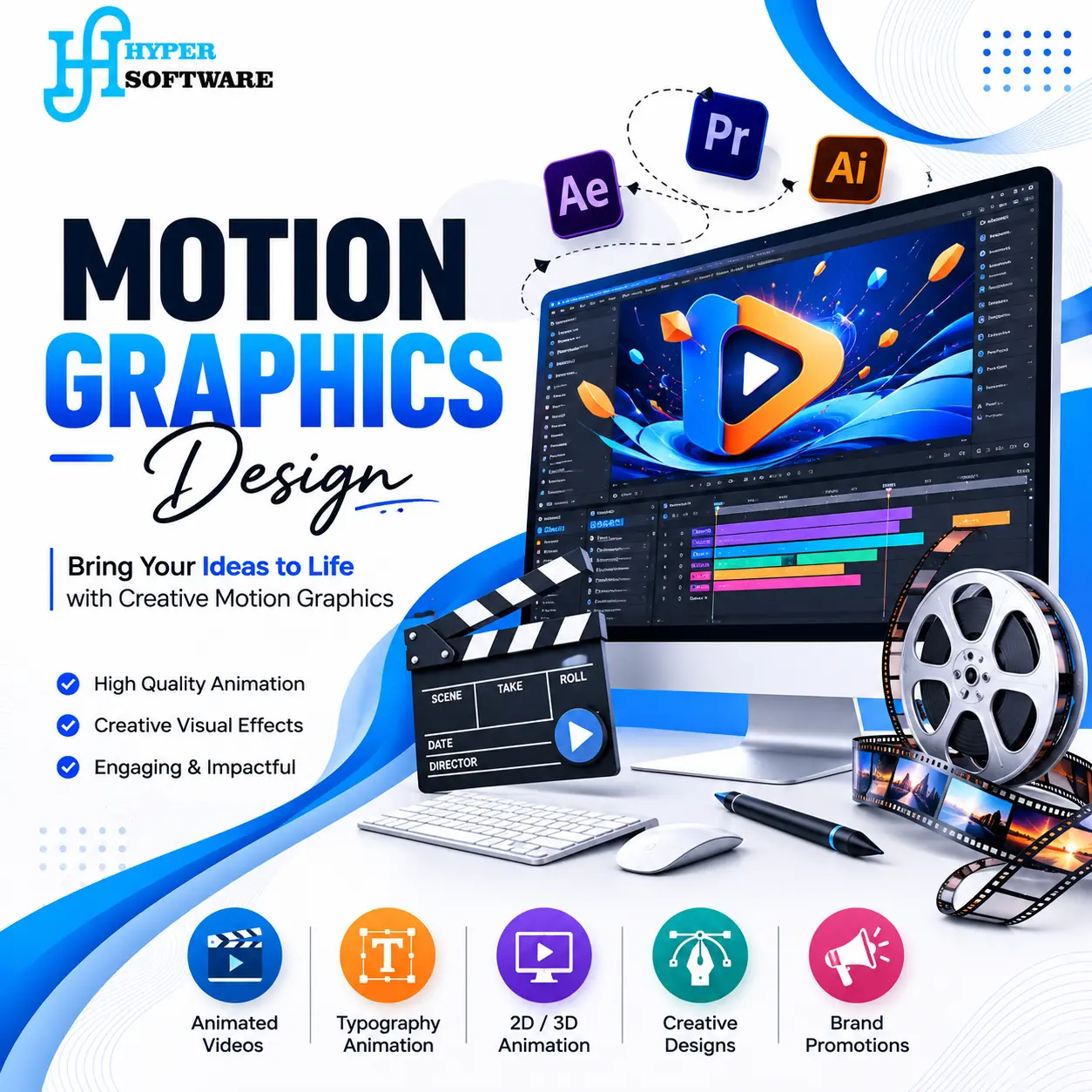
Most people scroll past a static banner in under two seconds. A well-made motion graphics video editing holds attention for the full length of the clip, and that's the whole point of hiring someone to make one. Motion graphics is animated design, text, icons, shapes, and images brought to life with movement and sound, used to explain a product, promote a brand, or simplify something complicated into 30 seconds someone will actually watch.
Hyper Software has been producing motion graphics for clients in India and abroad since 2020, working alongside our web development, app development, and branding teams under one roof. This page covers what motion graphics actually is, what it costs, how the process works, and how to tell if you need an agency or can get by on your own.
Motion graphics is the animation of graphic design elements, typography, icons, shapes, logos, and images, rather than the animation of drawn characters. Think of the intro animation on a SaaS product's homepage, the data visualization in a LinkedIn ad, or the animated slide deck before a conference talk starts. That's motion graphics.
It sits between two other formats people often confuse it with:
Motion graphics is the fastest and most flexible of the three, which is why it's the most commonly requested format for business videos right now.
Get Free Consultation Within Minutes
Our motion graphics work covers:
Every project includes scriptwriting support (if needed), a storyboard for approval before animation starts, and two rounds of revisions built into the base price.
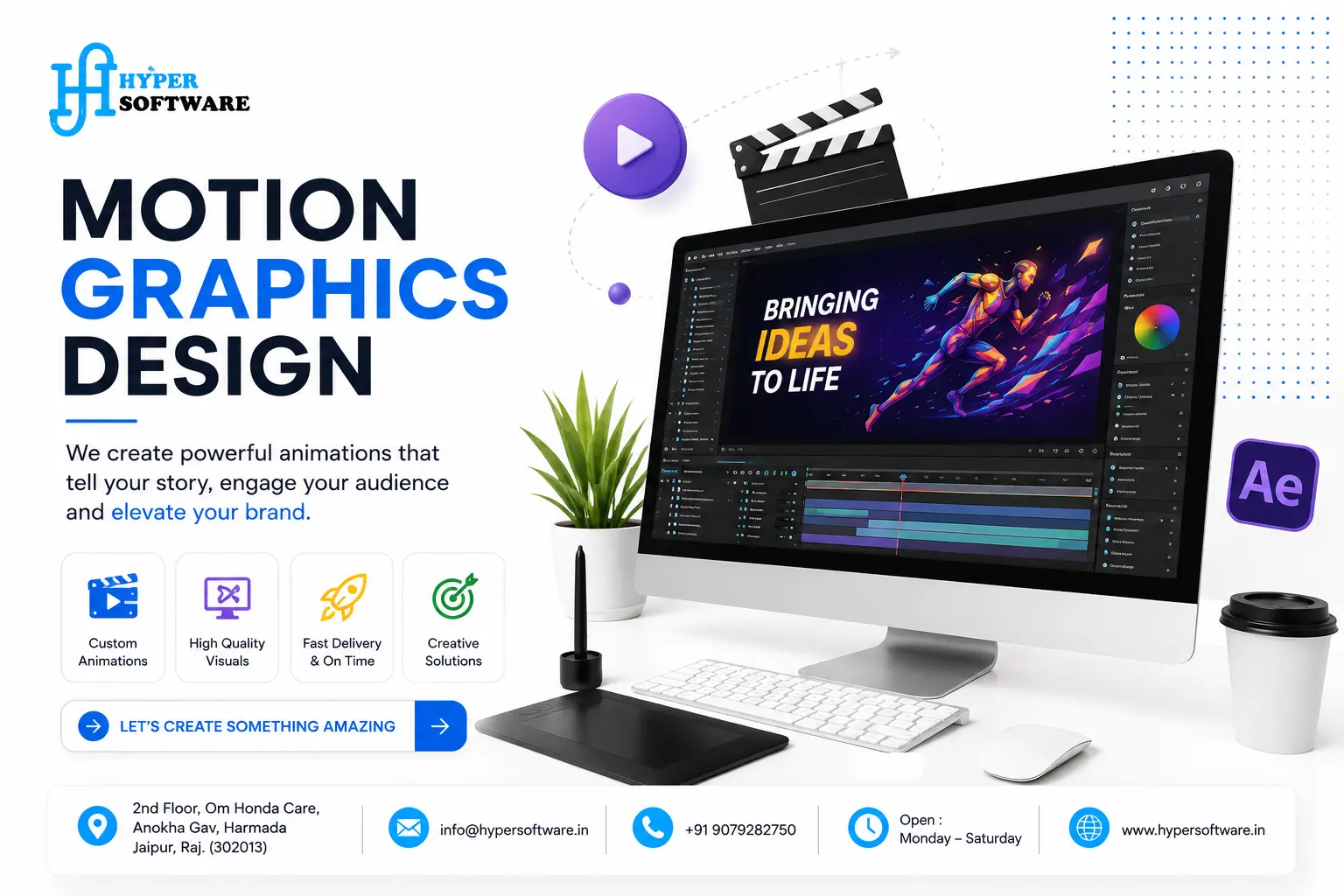
Attention spans on social platforms keep shrinking, and static images just don't hold a scroll the way a few seconds of movement does. A short animated clip can explain what a product does faster than a paragraph of copy, and it works across more channels: website, ads, email, pitch decks, and social, all from one production.
There's also a practical reason marketing teams keep coming back to motion graphics: it's cheaper and faster to produce than live-action video. No location scouting, no actors, no reshoots because of bad weather. Once the storyboard is approved, the rest is design and animation work that happens on a predictable timeline.
If you're not sure which format fits, a simple test helps: if your video needs a character who talks, moves, and reacts, you need 2D or 3D character animation. If it needs to explain an idea using shapes, icons, and text, motion graphics is almost always the right (and cheaper) call.
| FormatBest ForTypical Cost (per minute, India)Turnaround | |||
| Motion Graphics | Explainers, ads, presentations, data visualization | ₹25,000 – ₹90,000 | 5-10 business days |
| Whiteboard Animation | Tutorials, "how it works" explainers | ₹20,000 – ₹50,000 | 5-7 business days |
| 2D Character Animation | Storytelling with characters, emotional brand videos | ₹55,000 – ₹1,20,000 | 10-15 business days |
| 3D Animation | Product renders, architecture, medical device demos | ₹1,20,000 – ₹2,50,000+ | 15-25 business days |
Two revision rounds are included at the storyboard stage and one at the final animation stage. Extra rounds are billed separately, which we'll always flag before starting the work.
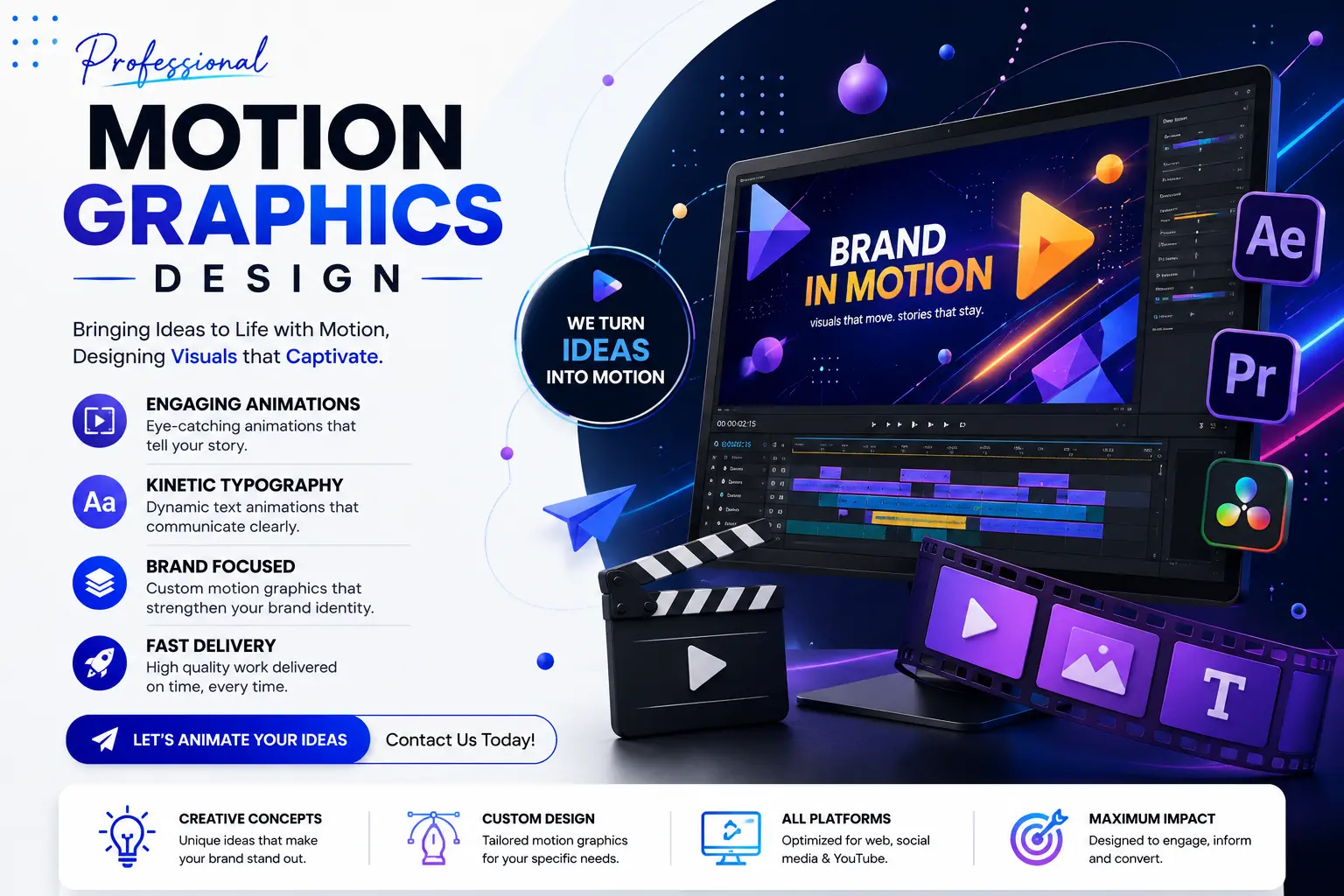
Pricing varies a lot depending on who's doing the work and how complex the animation is. Here's a realistic breakdown for 2026:
| Provider TypeCost per Finished MinuteWhat You Get | ||
| Freelancer (India) | ₹8,000 – ₹25,000 | Fast, budget-friendly, works best with a very clear brief |
| Mid-tier studio (India) | ₹40,000 – ₹90,000 | Custom design, dedicated producer, proper revision cycle |
| Premium / Global Agency | $1,500 – $15,000+ | Full creative team, brand strategy, high-end 3D options |
A typical 30-45 second motion graphics explainer with script, voiceover, and music usually lands between ₹60,000 and ₹1,20,000 all-in when done by a mid-tier studio. Rates vary based on how many custom illustrations are needed, how many revision rounds you use, and whether a professional voiceover artist is booked.
Watch out for quotes that look unusually low or unusually high without an itemized breakdown. Ask exactly what's included: script, storyboard, voiceover, music licensing, and number of revisions, before comparing two numbers side by side.
Doing it yourself makes sense if you have a very small budget, need something quick for internal use, and have time to learn a tool like Canva or CapCut's motion templates. Expect a template-based look, limited customization, and a result that a trained eye will spot as generic within a few seconds.
Hiring a freelancer costs less than an agency and works well for simple, one-off projects with a tight, well-written brief. The risk is availability: a freelancer juggling five clients might push your deadline back, and there's no backup if they get sick or overbooked mid- project.
Hiring an agency costs more but gets you a dedicated producer, an in-house design and animation team, and accountability if something goes wrong partway through the project. For anything that represents your brand publicly, on ads, your homepage, or a fundraising pitch, this is usually the safer call.
The honest answer: if the video is internal, low-stakes, or a one-time need, DIY or a freelancer is fine. If it's client-facing, going into paid ads, or part of your brand's first impression, an agency earns its price.
A fintech SaaS startup came to us two weeks before a product launch with no video and a homepage that was still just text and screenshots. They needed something that could explain a fairly technical payment reconciliation tool to non-technical small business owners, fast.
We wrote a script in one round of feedback, built the storyboard in three days, and used simple 2D motion graphics, icons, arrows, and short animated text, instead of trying to render a full software UI walkthrough, which would have taken too long to build accurately. The finished 40-second video went live on their homepage six days after the storyboard was approved, ahead of their launch date. They later told us the video became the most- watched piece of content on the page, based on their own heatmap data.
Yes, or at minimum a clear brief. The script determines the length, pacing, and storyboard, and changing it after animation has started is the most common cause of delays and added cost.
Yes. Motion graphics is one of the most common formats for Instagram, LinkedIn, and YouTube ads because it's fast to produce, easy to resize for different placements, and holds attention better than a static image.
2D motion graphics uses flat design, icons, and typography and costs less. 3D motion graphics models objects in three dimensions for a more realistic look, used for product renders and architectural visuals, and costs more due to modeling and rendering time.
Most studios, including ours, include two revision rounds at the storyboard stage and one at final animation. Additional rounds are usually billed separately.
A freelancer is usually cheaper for a single, simple project with a clear brief. An agency costs more but offers a dedicated producer, in-house team, and backup if something goes wrong, which matters more for client-facing or ad-bound videos.
A storyboard is a scene-by-scene sketch of the video showing what happens in each shot before any animation work begins. It's the cheapest and fastest point to make major changes.
Yes, if the project files are kept and organized well. Studios that build videos in layered, editable project files can update text, dates, or pricing without rebuilding the whole animation from scratch.
30 to 45 seconds works for most homepage and ad placements. Longer videos, 60-90 seconds, suit more detailed product explainers or investor pitch decks where the audience is already engaged.
Voiceover is optional but recommended for most explainer videos, since it improves comprehension. It's usually quoted separately from the animation cost, along with any music licensing.
SaaS and technology companies, e-commerce brands, healthcare, real estate, and education use motion graphics most often, mainly for product explainers, onboarding content, and social ads.
Hyper Software has run design and development work for clients in India and abroad since 2020, based out of Jaipur, Rajasthan. Motion graphics sits alongside our website design, app development, and branding teams, so a video we produce can be built to match a site or app we're also working on, without a separate agency handoff.
Motion graphics is used for explainer videos, social media ads, presentations, website animations, and animated logos. It's most common wherever a business needs to explain something quickly without filming live-action video.
In India, motion graphics typically costs ₹25,000 to ₹90,000 per finished minute depending on complexity. Globally, agency pricing ranges from $1,500 to $15,000+ per minute. A short 30-45 second explainer usually costs ₹60,000 to ₹1,20,000 all-in from a mid-tier studio.
Most 30-60 second motion graphics videos take 5 to 10 business days from an approved script, split roughly across storyboard, animation, and sound design stages.
Adobe After Effects is the industry standard for 2D motion graphics. Cinema 4D or Blender is used when 3D elements are needed alongside 2D animation.
Animation is the broader category and includes character-based storytelling. Motion graphics specifically refers to animating graphic elements, text, icons, shapes, and logos, without full character animation.
Have questions or need expert guidance? Our team is ready to help you with the right technology solutions for your business.