Hyper Software ne hamare business ko online ek nayi pehchan di. Website professional, fast aur SEO optimized hai. Website Design & Development ke liye best company.


Website development is the process of turning a business idea into a working website: planned, designed, coded, tested, and launched so it runs properly on every device. If you're comparing options, here's the short version: a basic business website typically costs $1,500 to $15,000 and takes four to eight weeks, and the biggest cost driver isn't the developer's hourly rate, it's how clearly the project is scoped before anyone starts coding.
Hyper Software has been building websites for businesses since 2020, from our base in Jaipur, working with clients across India and around the world. This page walks through what website development actually involves, what it costs, how the process works, and what to check before you hire anyone to build yours.
Website development is the technical work of building a website: writing the code that makes pages load, function, and connect to a database, on top of the visual design. It's different from web design, which we'll get into below.
Development has two main halves. Front-end development is everything a visitor sees and clicks: the layout, the buttons, the menus, built with HTML, CSS, and JavaScript. Back-end development is what runs behind the scenes: the server, the database, the logic that processes a form submission or an order. A developer (or a team) usually handles both, or specializes in one and works alongside a specialist in the other.
A modern website also needs a content management system (CMS) so a non-technical team member can update text and images without calling a developer every time. WordPress runs a large share of the web for this reason. For more custom builds, teams use frameworks like React or Next.js on the front end and Node.js, PHP (Laravel), or Python (Django) on the back end.
Get Free Consultation Within Minutes
People use these two terms interchangeably, and that mix-up causes real project problems. Web design is the visual and experience side: layout, color, typography, how easy the site is to use. Web development is what makes that design actually function in a browser.
Think of it like building a house. The designer draws the blueprint and picks the finishes. The developer pours the foundation, runs the wiring, and makes sure the doors actually open. You need both. A beautiful design that isn't built properly won't load fast, won't rank well, and won't hold up as your business grows. A well-coded site with a weak design won't convert visitors into customers.
This is why a full-service partner (not a solo designer, and not a solo coder) tends to produce better results for most businesses. It's also why, if a vendor hands you a Figma file and calls the job done, you haven't actually gotten a website yet, you've gotten a picture of one.
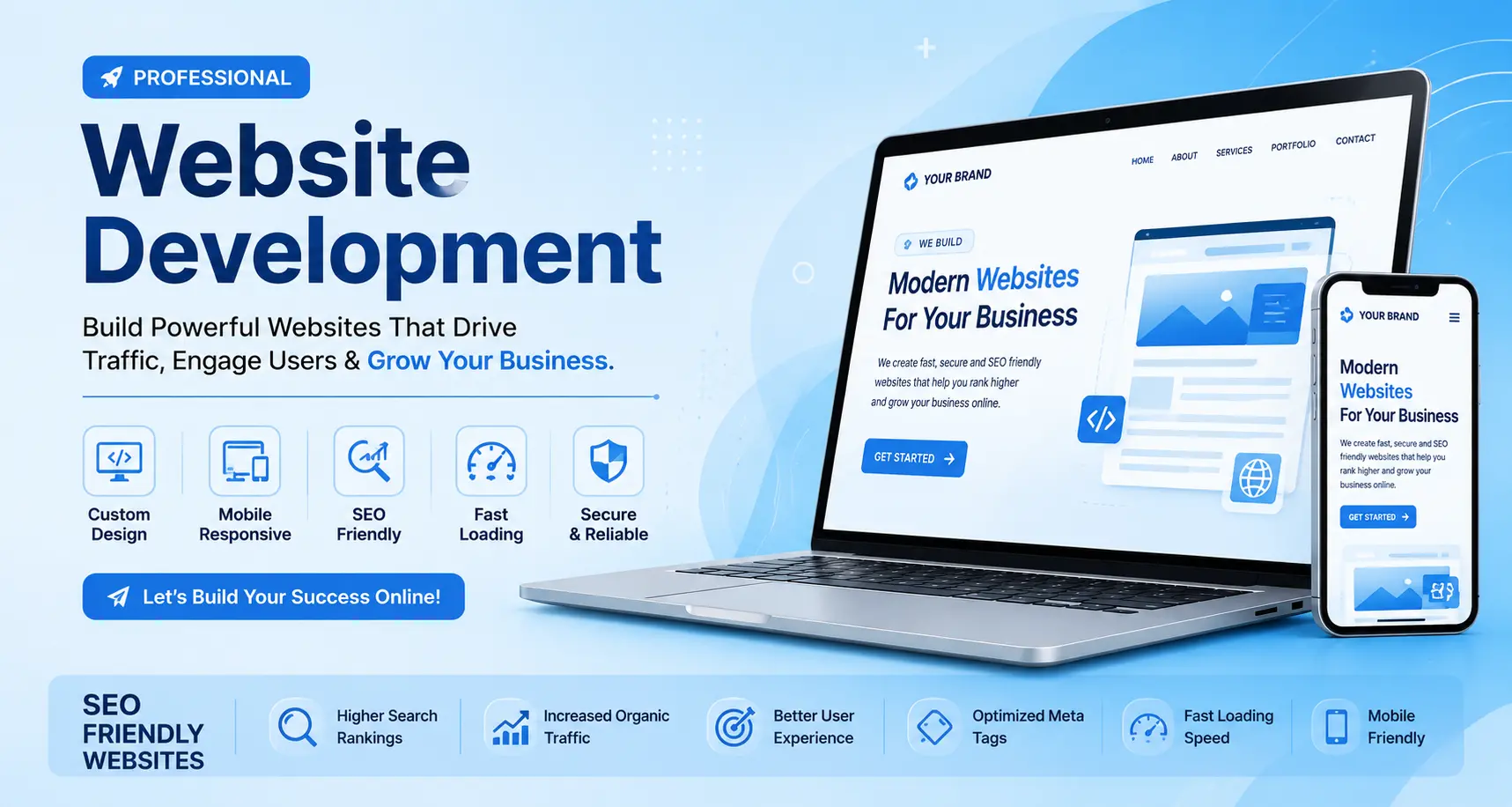
Hyper Software ne hamare business ko online ek nayi pehchan di. Website professional, fast aur SEO optimized hai. Website Design & Development ke liye best company.
We build for businesses at every stage, from a first website to a full custom platform. Here's what falls under "website development" when you work with Hyper Software
Custom Website Development
Built from scratch around your business, not squeezed into a template. This is the right choice once your business has specific workflows, a distinct brand identity to protect, or plans to scale past what a template can handle.
Business & Corporate Website Development
Professional, content-driven sites for companies that need to establish credibility fast: service pages, an about page that builds trust, case studies, and a clear path to contact or enquiry.
Full online stores built on Shopify, WooCommerce, or fully custom platforms, with product catalogs, secure payment gateways, inventory sync, and checkout flows that don't lose sales to friction.
CMS Website Development (WordPress and beyond)
Websites your own team can update without touching code. We build on WordPress most often because of its flexibility and the size of its plugin ecosystem, but we also work with Webflow and headless CMS setups for teams that want more editing power without sacrificing speed.
Web Application Development
Beyond a standard website: customer portals, booking systems, dashboards, and internal tools that need a database, user logins, and custom logic, not just static pages.
Website Redesign & Migration
For businesses with an outdated or underperforming site. We audit what's broken, keep what's working (including your SEO rankings, through a careful redirect strategy), and rebuild the rest.
UI/UX Design for Websites
Wireframes and visual design that come before a single line of code, so the site is planned around how real users behave, not guesswork.
Website Maintenance & Support
Security updates, backups, uptime monitoring, and content changes after launch. A website is not a "build it once" purchase, and we say that plainly rather than let you find out the hard way.

This is one of the most common questions we get on a first call, so let's answer it directly.
This is one of the most common questions we get on a first call, so let's answer it directly. Website builders (Wix, Squarespace, Shopify's basic plans) let you assemble a site from templates without writing code. They're fast and cheap to start. Custom development means a team builds the site around your specific requirements, with full control over code, design, and performance.
| Factor | Website Builder | Custom Development |
| Upfront cost | Low ($10–$100/month) | Higher ($1,500–$50,000+ one-time) |
| Design flexibility | Limited to template structure | Unlimited, built around your brand |
| Speed & Core Web Vitals | Often weaker (platform code bloat) | Built for performance from the start |
| SEO control | Basic tools only | Full technical SEO control |
| Scalability | Hits limits as you grow | Built to grow with the business |
| Ownership | You rent the platform | You own the code outright |
| Best for | Solo founders, quick | Businesses that plan to grow, or need |
| campaign pages | specific functionality |
Neither option is wrong on its own. A builder is a reasonable choice if you need something online this week and your needs are genuinely simple. Custom development earns its cost back once your website needs to do real work: generate leads, process payments, integrate with your CRM, or represent a brand you plan to build for years, not months.
Every project we run follows the same seven-step structure. We don't skip steps to move faster, because the projects that skip discovery are the ones that end up over budget later.
We start with your business goals, not your page list. What is this site actually supposed to do: generate leads, sell products, support existing customers? Who's the audience? What does "success" look like six months after launch? This stage usually takes one to two weeks and prevents the most expensive kind of rework: rebuilding a site because it was never scoped correctly in the first place.
We map out every page, how they connect, and what content each one needs. This becomes the blueprint the rest of the project is built on.
Before any code is written, we lay out where content, buttons, and navigation sit on each page (wireframes), then apply your brand's colors, fonts, and imagery on top (visual design). You see and approve this before development starts, which is the point where changes are cheapest to make.
This is where the site gets built. Front-end developers turn the approved design into a working, responsive interface. Back-end developers set up the server, database, and any logic the site needs, like a contact form that actually sends an email, or a product catalog that pulls from a database instead of being hardcoded.
We set up the CMS so your team can manage content independently, and load in your real content, not placeholder text, so what you're reviewing looks like the real site.
We test across browsers, devices, and screen sizes, check every form and link, run performance checks against Core Web Vitals, and fix what's broken before launch, not after.
We go live, monitor closely for the first days, and stay involved for updates, security patches, and content changes. A launch date is a milestone, not a finish line.
A note on timing: discovery and planning take one to two weeks, design takes two to four weeks, development takes three to six weeks depending on scope, and testing takes one to two weeks. A standard business website typically runs four to eight weeks start to finish; a complex platform or eCommerce build can run three to six months.
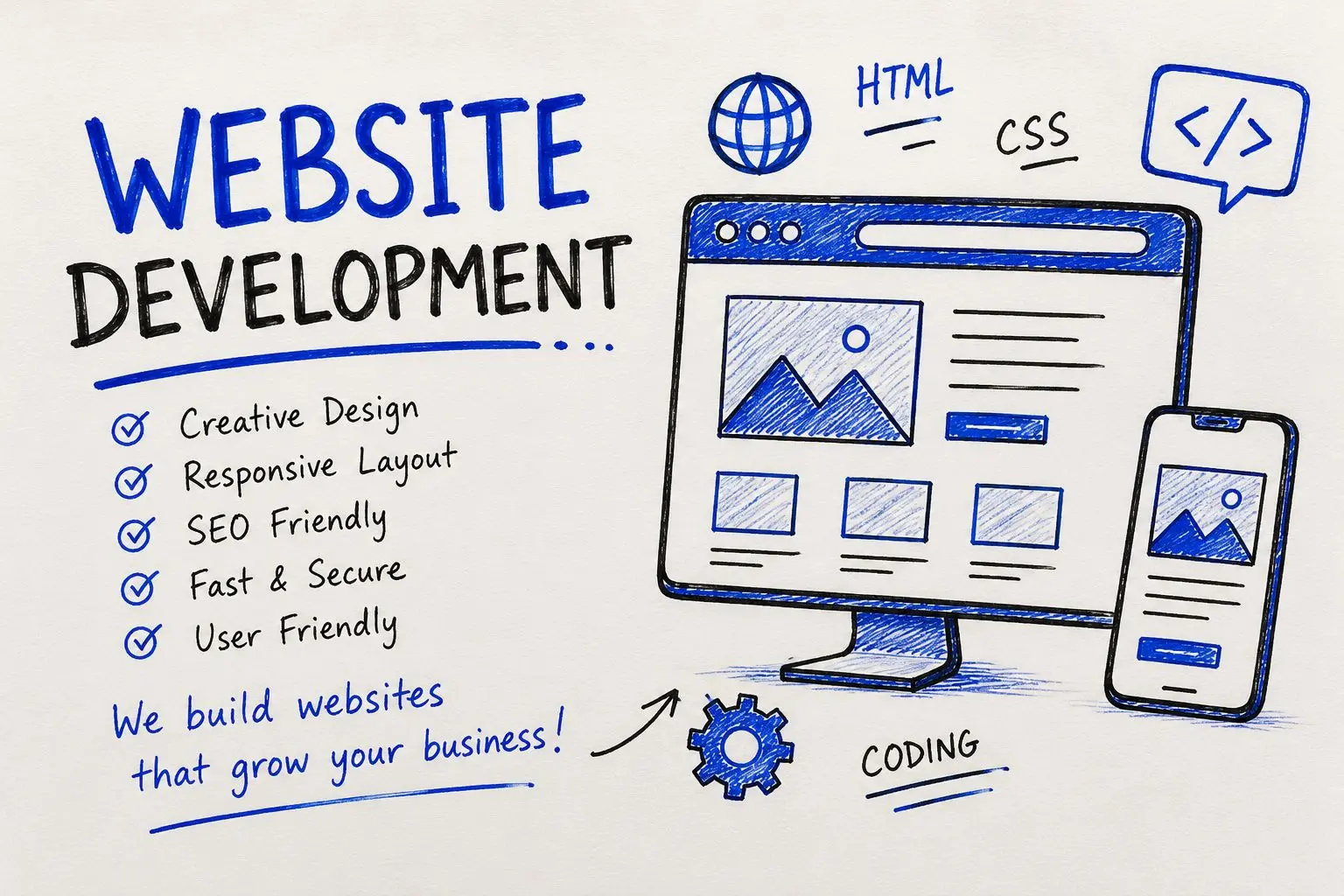
The right technology depends on what the site needs to do, not on what's trendy. Here's what we typically work with:
We choose the stack based on your project's scale, not the other way around. A five-page business site doesn't need the same architecture as a booking platform processing thousands of transactions a month.
This is the question most agencies dodge. Here's a straight answer, based on current 2026 market data across small business, eCommerce, and custom builds.
| Website type | Typical cost range | Typical timeline |
| Basic brochure/landing site (3–7 pages) | $1,500 – $5,000 | 2–4 weeks |
| Business/corporate website (10–20 pages) | $3,000 – $15,000 | 4–8 weeks |
| eCommerce website | $8,000 – $50,000+ | 6–14 weeks |
| Custom web application/portal | $20,000 – $150,000+ | 3–9 months |
What changes the price within these ranges: the number of unique page layouts (not just page count), how many third-party integrations you need (payment gateways, CRM, booking systems each add cost), how much content needs to be written from scratch, and how many rounds of design revision you expect.
Don't forget the ongoing costs. Hosting, domain renewal, SSL certificate, and basic maintenance typically run $200–$2,000 a year depending on site complexity. A vendor who only quotes the build price and never mentions this is leaving out a real cost you'll hit within twelve months.
Both are valid paths. The right one depends on your time, budget, and how much the website actually needs to do.
| Doing It Yourself | Hiring an Agency | ||
| Best for | Very simple sites, tight budgets, comfort with tools like Wix or WordPress themes | Businesses that need it done right the first time, or need custom functionality | |
| Cost | Lower upfront ($0–$500 in tools/templates) | Higher upfront ($1,500+), but fewer hidden failures | |
| Time | High — you're learning the tools as you | Low — a team handles it while you run | |
| investment | go | your business | |
| SEO & | performance | Often weak unless you know what you're doing | Built in from the start |
| What tends to | Sites that look unfinished, broken | Rare, but choosing the wrong agency | |
| go wrong | mobile layouts, missed SEO basics, no | (unclear scope, no fixed timeline) can | |
| backup plan when something breaks | cause the same problems at a higher | ||
| price |
Our honest take: if your business truly needs a five-page site with no special functionality and you have the time to learn a builder properly, DIY is a fair choice. The moment your site needs to generate leads reliably, process payments, integrate with other tools, or represent a brand you're serious about, the time you'd spend learning and fixing usually costs more than hiring it out correctly the first time.
Website development needs differ by industry, and we've built for a wide range:
Typically: discovery and planning, UI/UX design, front-end and back-end coding, CMS setup, content integration, testing and QA, launch, and post-launch support.
WordPress works well for most business, blog, and eCommerce sites through WooCommerce. Fully custom development makes sense when you need functionality or performance a CMS and its plugins genuinely can't deliver.
Check their portfolio for work similar to your project, ask for a clear breakdown of what's included in their quote, confirm who owns the code after launch, and ask directly what post-launch support costs.
Common front-end tools include HTML, CSS, JavaScript, and React. Back-end options include Node.js, PHP (Laravel), and Python (Django), paired with a database like MySQL or MongoDB.
Yes, if it's built on a CMS like WordPress. Ask your developer to confirm this before the project starts, since some fully custom builds require a developer for every content change unless a CMS is added.
It means the website automatically adjusts its layout to work properly on phones, tablets, and desktops, instead of only looking right on one screen size.
Yes. Social platforms can change their algorithms or rules at any time, and you don't own that audience. A website is the one online asset your business fully contros.
Ongoing hosting, security updates, backups, and content changes. A website is not a one-time project; treat launch as day one, not the finish line.
Yes, with a proper redesign process that includes a redirect strategy, so old URLs point to their new equivalents and search engines don't lose track of your existing rankings.
Yes. Hyper Software serves clients globally, working remotely with businesses across different countries and time zones, in addition to clients across India.
We started with discovery: reviewed their existing analytics, mapped out what customers actually searched for, and rebuilt the site from the ground up on a modern stack with a CMS their team could manage directly. We restructured the navigation around what customers were actually looking for, rebuilt every page for mobile speed, and set up proper tracking so they could see exactly which pages drove enquiries.
Within the first two months after launch, page load time dropped to under two seconds, and the client reported a noticeable increase in enquiry form submissions compared to the same period the year before. More importantly, their team could finally update pricing and product pages themselves, without waiting on a developer for every small change.
The tradeoff to know going in: custom development costs more upfront and takes longer than a DIY builder. For a business planning to grow, that upfront cost is usually the cheaper path over three years, once you count the limitations and rework a template site tends to hit.
Hyper Software has been building websites, software, and digital platforms for businesses since 2020, based in Jaipur, Rajasthan, and working with clients across India and internationally. We handle the full scope under one roof: website development, custom software, mobile apps, eCommerce platforms, CRM and ERP systems, UI/UX design, and the digital marketing and automation work that supports a website after it launches.
We quote clearly, explain the process before we ask for a commitment, and stay involved after launch instead of disappearing once the invoice is paid.
Ready to talk about your website? Call us at +91 9079282750 or visit www.hypersoftware.in to get a free quote
Website development is the process of building a working website through coding, covering front-end (what visitors see), back-end (the server and database), and testing, on top of the visual design.
Basic business websites typically cost $1,500 to $15,000. eCommerce sites run $8,000 to $50,000+, and custom web applications can range from $20,000 to $150,000+, depending on features and integrations.
A standard business website takes four to eight weeks. eCommerce sites typically take six to fourteen weeks, and complex web applications can take three to nine months
Web design covers the look and user experience; web development is the coding work that makes that design function as a real, working website.
A website builder works for very simple sites on tight budgets. Once your site needs to generate leads reliably, process payments, or scale with your business, custom development is usually the better long-term investment.
Have questions or need expert guidance? Our team is ready to help you with the right technology solutions for your business.