
Business website bilkul premium quality ki bani hai. Mobile responsive design aur clean layout ki wajah se customer experience bahut achha ho gaya. Highly recommended.

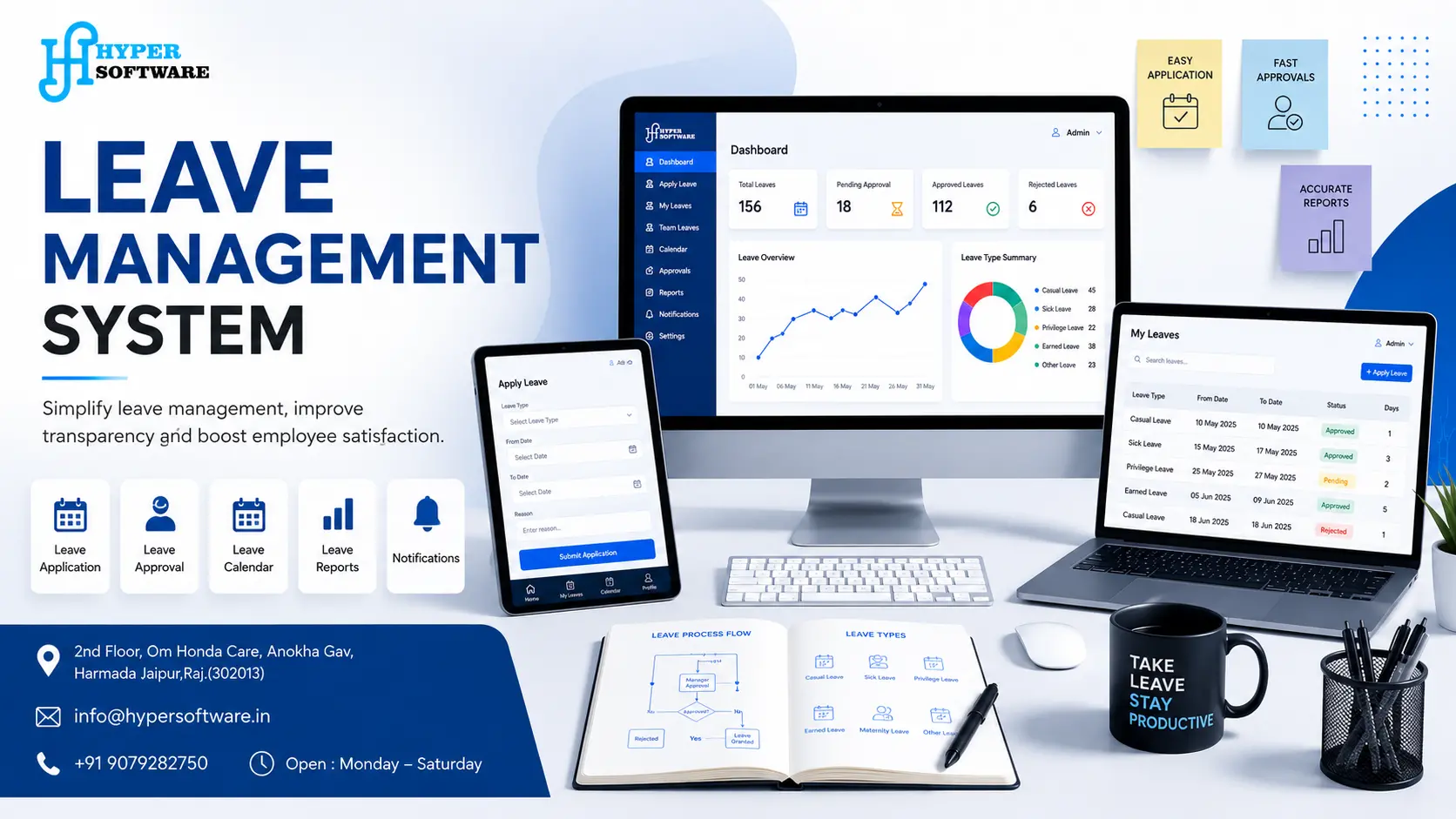
A leave management system is software that automates how employees request time off and how managers approve it, so leave balances, policies, and records stay accurate without anyone chasing emails or updating a spreadsheet by hand. If you're reading this because your HR inbox is full of "can I take Friday off" messages, you already know why this matters.
We build custom leave management systems at Hyper Software, so this guide covers what the software actually does, what to look for, what it costs, and — just as importantly — when off-the-shelf software is enough and when you need something built around your own rules.
A leave management system is a digital tool that handles the entire leave cycle: an employee applies for leave, the request goes to the right manager automatically, the system checks the employee's leave balance against company policy, and once approved, the record updates everywhere it needs to — the calendar, the attendance log, and eventually payroll.
Before these systems existed, most companies ran leave through a mix of paper forms, Excel sheets, and email threads. It worked, sort of, until the company grew past 20 or 30 people and HR spent half its week just tracking down who was off and who had approved what.
Get Free Consultation Within Minutes
The case for automating leave isn't really about looking modern. It's about the hours HR loses and the mistakes that creep in when leave is tracked by hand.
Fewer payroll errors. When leave data feeds directly into payroll, you stop paying people for days they didn't actually work — or shortchanging someone who did.
Real visibility for managers. A manager can see who's off this week without asking around, which matters a lot during busy periods or when three people request the same Friday.
Policy consistency. Once your leave rules are built into the system, every employee gets treated the same way. No manager quietly approving extra days for a favourite team member.
Audit-ready records. If a labour inspector or auditor asks for leave records, you pull a report instead of hunting through old emails.
Less admin time. HR teams we've worked with typically cut leave-related admin work by more than half once approvals stop happening over email.
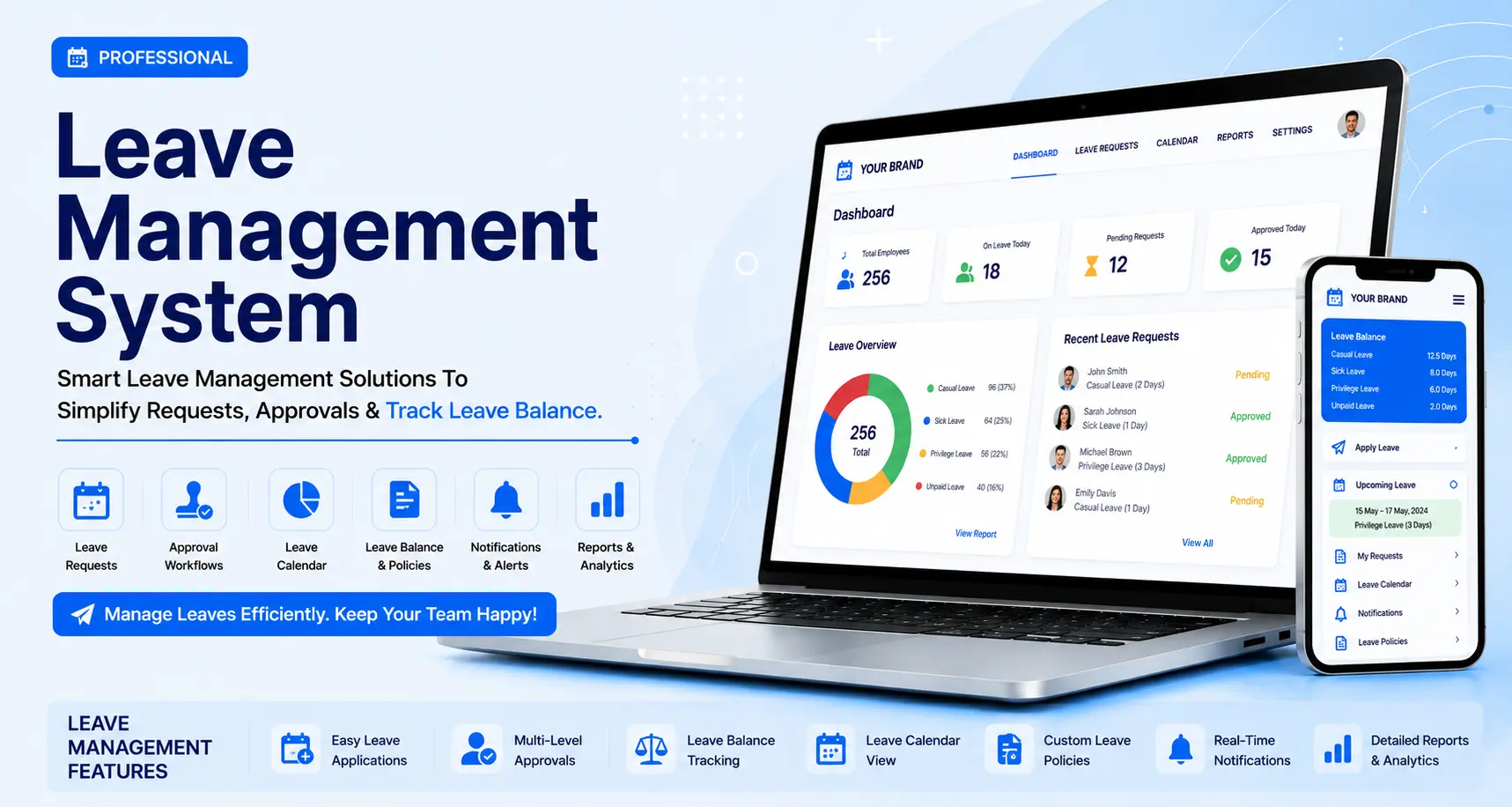
Not every system needs every feature below — a 15-person startup and a 500-person manufacturing company have different needs. But this is the checklist worth working through.
| Feature | What It Actually Does For You |
| Self-service leave application | Employees apply from a phone or laptop, no forms |
| Multi-level approval workflow |
Requests route to the right manager, or a chain of managers, automatically |
| Automated leave balance calculation |
No manual math on accruals, carry-forwards, or encashment |
| Leave policy configuration |
Different rules for different departments, locations, or employee types |
| Team leave calendar | Managers see who's off before approving new requests |
| Payroll and attendance integration |
Leave data flows straight into salary processing |
| Mobile app access | Apply, approve, or check balances from anywhere |
| Compliance reporting | Ready-made leave registers and reports for audits |
| Notifications and reminders |
Employees and managers get alerts instead of chasing each other |
This is the part most articles on this topic skip entirely, and it's usually the actual decision a business is trying to make.
Off-the-shelf software (think ready-made HR platforms) gets you running in days. It's built for the "average" company, with common leave types and standard workflows already configured. That's great if your leave policy is fairly standard.
Custom-built systems are built around how your company actually works — your specific leave types, your approval chain, your integrations with existing payroll or ERP software, and your compliance requirements across the states or countries you operate in. It takes longer to build, but you're not bending your process to fit someone else's software, and you own what gets built.
|
Off-the-Shelf |
Custom-Built |
|
|
Time to launch |
Days to weeks |
4–10 weeks depending on scope |
|
Fits unusual policies |
Often needs workarounds |
Built exactly to your rules |
|
Integration with |
Limited to what the vendor |
Built to connect with what you |
|
existing systems |
supports |
already use |
|
Ongoing cost |
Monthly/annual subscription, scales with employee count |
One-time build cost, lower long-term cost at scale |
|
Ownership |
You're renting the software |
You own the system outright |
|
Best for |
Standard policies, small teams, fast setup |
Specific workflows, multi-location compliance, or integration needs |
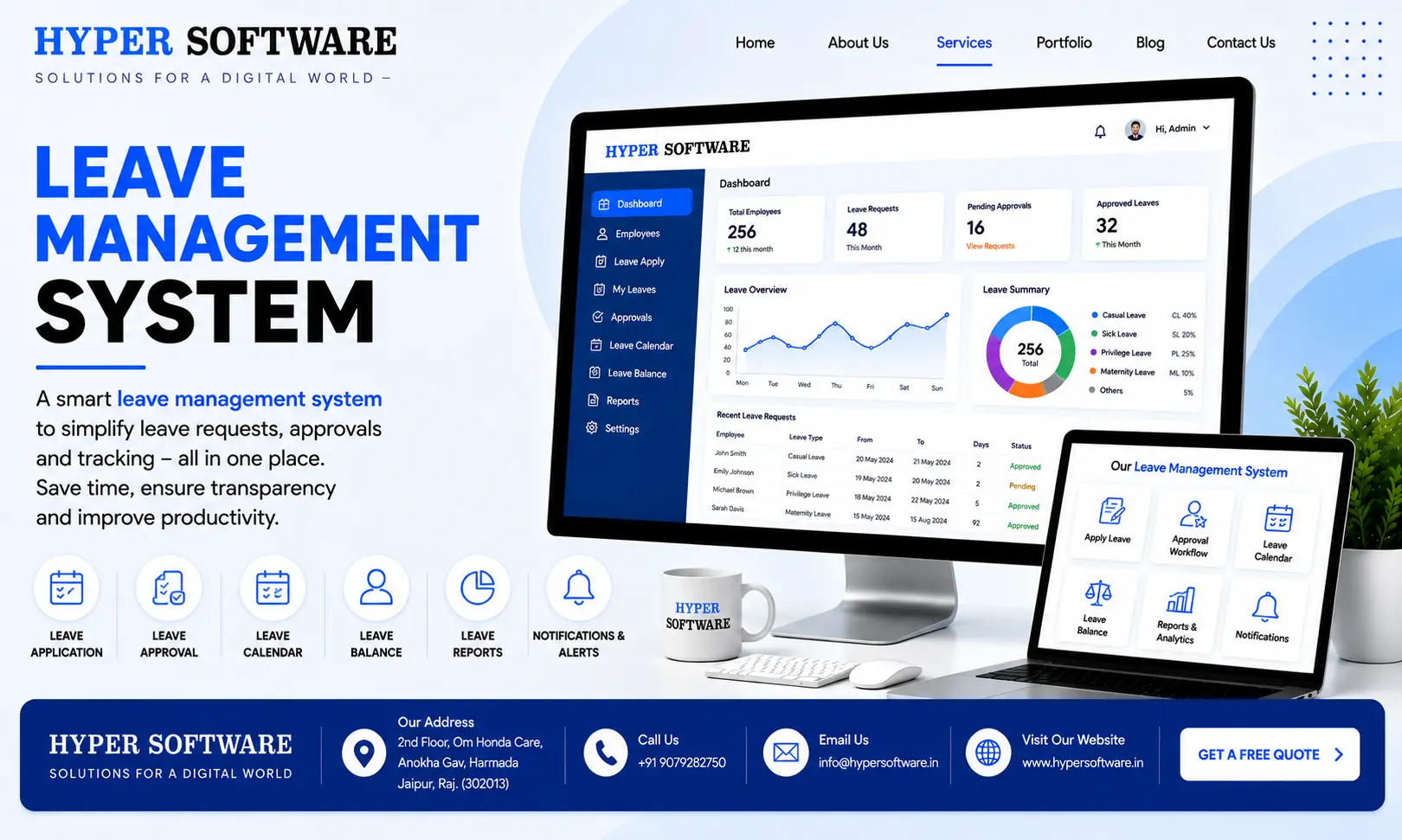 How a Leave Management System Works
1. Employee submits a request through the web portal or mobile app, selecting leave type and dates.
2. System checks eligibility against the employee's current balance and company policy — for example, whether they've completed the minimum service period for earned leave.
3. Request routes to the approver — a direct manager, or a chain of approvers for longer leave.
4. Manager approves, rejects, or asks for changes, with the reason logged automatically.
5. Balance updates instantly across the calendar, attendance record, and payroll system.
6. Reports generate on demand for HR, audits, or management review.
This is where a lot of generic leave software falls short — it isn't built with Indian labour law in mind, and compliance here isn't optional.
Leave entitlements in India come from two main sources. The Factories Act, 1948 governs manufacturing units, giving workers who complete 240 days in a calendar year one day of earned leave for every 20 days worked — roughly 15 days a year. Everyone outside manufacturing — IT companies, shops, service businesses — falls under their state's Shops and Establishments Act, which typically grants 12 to 21 earned leave days a year depending on the state (Maharashtra and Karnataka, for instance, are more generous than some other states).
On top of that, the Maternity Benefit Act, 1961 mandates 26 weeks of paid maternity leave, and this applies nationally regardless of which otherAct covers the employee. Most states also cap leave carry-forward at 30 to 45 days, after which unused leave typically has to be encashed rather than carried indefinitely.
A leave management system built for the Indian market needs to apply the correct Act automatically based on the employee's location and industry — something most one-size- fits-all software doesn't do out of the box. If you operate in multiple states, this is exactly the kind of rule that's worth building in rather than managing manually.
(Businesses outside India: your leave system should be built around your own country's labour code the same way — this is a case where "customize it properly" beats "buy something generic" almost every time.)
| Leave Type | Typical Basis |
| Earned/Privilege Leave |
Accrued based on days worked; governed by Factories Act or state Shops Act |
| Casual Leave | Short, unplanned personal leave — usually 6–12 days a year |
| Sick Leave |
Health-related absence, often needing a medical certificate beyond a few days |
| Maternity Leave | 26 weeks under the Maternity Benefit Act, 1961 |
| Paternity Leave | Not centrally mandated, but widely offered as company policy |
| Comp-Off | Time credited for working on a holiday or weekend |
| Leave Without Pay | Unpaid leave once paid leave balance is exhausted |
| Bereavement / Marriage Leave |
Company policy, not statutory in most states |
Every business trying to fix its leave process ends up choosing between three paths. Here's when each one actually makes sense.
Manual tracking (spreadsheets,forms, WhatsApp approvals): Fine for under 10 employees with simple leave rules. Costs nothing upfront but eats HR time every single week, and mistakes are almost guaranteed once more than one person is tracking the same sheet.
Off-the-shelf software: Sensible for small to mid-sized teams with fairly standard leave policies. You're up and running fast, but you're paying an ongoing subscription that grows with headcount, and you'll hit a ceiling the moment your policy doesn't match the software's assumptions.
Custom development: Worth it once your leave rules are genuinely specific — multiple states, unusual approval chains, integration with an existing payroll or ERP system, or leave rules tied to shifts and locations. It costs more upfront and takes longer to build, but there's no subscription creep, and the system does exactly what your business needs instead of the other way around.
The mistake we see most often: a company outgrows a simple spreadsheet, jumps straight to an expensive enterprise HR suite, and ends up paying for a dozen modules they never use just to get the one leave feature they actually needed.
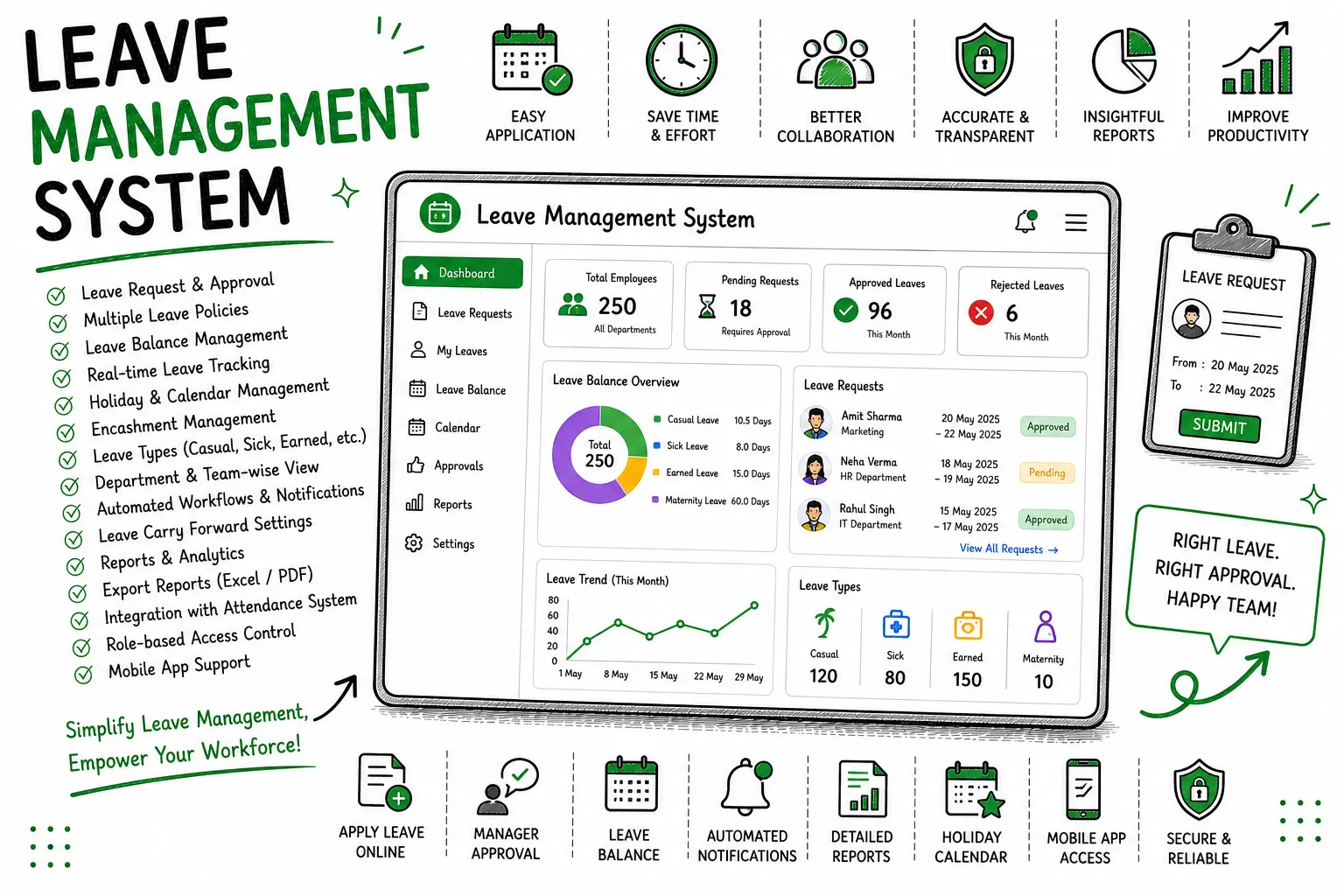
Pricing varies a lot depending on the route you take.
Exact figures always depend on your specific requirements — treat any number you see online as a starting point for a conversation, not a quote. Get in touch with Hyper Software at +91 9079282750 for a scoped estimate based on your actual team size and policy complexity.
A logistics company in Rajasthan came to us managing leave for around 140 employees spread across three warehouses, using a shared Google Sheet and a WhatsApp group for approvals. Their HR manager was spending close to two days a week just reconciling who'd actually taken leave versus what payroll had on record, and disputes over leave balances were a monthly headache.
We built them a custom leave management system with location-specific policies (each warehouse had different shift patterns), a two-level approval chain, and direct integration with their existing payroll software. Employees could apply from their phones, warehouse supervisors approved from a simple dashboard, and payroll pulled leave data automatically instead of someone re-typing it every month.
Within the first payroll cycle after launch, leave-related payroll disputes dropped to zero, and their HR manager got back roughly a day and a half of her week. That's the kind of result a generic off-the-shelf tool couldn't have delivered, because their shift-based, multi-location policy wasn't something standard software handled well.
If you've decided custom development is the right route, here's what to check before signing anyone:
A leave management system is software that automates employee leave requests, approvals, balance tracking, and reporting, replacing manual processes like spreadsheets and email chains.
Subscription-based leave software for small businesses in India typically ranges from around ₹5,000 to ₹15,000 per year, while a custom-built system is usually a one-time development cost based on scope. Exact pricing depends on your requirements.
No. Even small teams under 20 people benefit once leave tracking starts causing confusion or payroll errors. The system just needs to match the size and complexity of the business.
Off-the-shelf software is pre-built for common leave policies and launches quickly, while custom software is built around your specific rules, approval chains, and integrations, and you own it outright.
Yes, most systems — especially custom-built ones — can be integrated directly with payroll software so leave data flows into salary processing automatically.
At minimum: earned/privilege leave, casual leave, sick leave, maternity leave, and comp-off. Many businesses also add paternity, bereavement, and unpaid leave categories.
Most custom leave management systems take 4 to 10 weeks to build and deploy, depending on the number of features, integrations, and approval workflows involved.
No specific law requires software, but businesses are legally required to maintain accurate leave records under the Factories Act or their state's Shops and Establishments Act. A system just makes that compliance easier to prove.
Yes, but this usually requires a custom-built system, since most off-the-shelf software applies one uniform policy rather than adjusting automatically by state.
This depends on company policy and state law — unused leave is typically carried forward up to a cap (often 30–45 days) or encashed once that cap is reached.
Hyper Software has been building custom software for businesses since 2020, based out of Jaipur, Rajasthan, and working with clients across India and internationally. Leave management systems are one part of the broader HR and business automation work we do — alongside custom software, mobile apps, ERP and CRM builds, and UI/UX design.
We don't sell a fixed template. We start by understanding how your business actually manages leave today, then build a system around that — whether it's a standalone leave tool or a module inside a larger HRMS or ERP system we're building for you.
Ready to stop tracking leave on spreadsheets? Call us at +91 9079282750 or visit www.hypersoftware.in for a free consultation.
Basic training helps adoption, but most modern systems are simple enough that employees can apply for leave within a few minutes of first use.
Yes, most systems — including the ones we build — include a mobile-friendly interface or app so employees and managers can apply for and approve leave from anywhere.
Leave management handles planned time off (vacation, sick leave, maternity leave), while attendance management tracks daily clock-in/out and unplanned absences. Many businesses run both together.
It depends on how standard your leave policy is. Standard policies are usually fine with off-the-shelf software; specific rules, multi-location compliance, or integration needs usually justify a custom build.
Yes, Hyper Software provides post-launch support and maintenance for every custom system it builds, including updates as your leave policy changes.
Have questions or need expert guidance? Our team is ready to help you with the right technology solutions for your business.